
Scottish and Northern Irish banknotes abroad: why exchange offices cannot take them and what to do instead
Scottish and Northern Irish pound notes are real money, but they are not exchanged outside the UK. Why that is, how to check your notes and what to do instead.
In short: Scottish and Northern Irish banknotes are genuine pounds, but they are local notes issued by commercial banks, and they are not traded internationally. That is why exchange offices outside the UK, including ours at Floriańska 37 in Kraków, cannot take them. Only notes with “Bank of England” printed across the top can be exchanged abroad. If you have other sterling notes, swap them at a bank in the UK before you travel, or use your card in Poland.
We explain this at the counter several times a week, usually to someone who has just landed from Edinburgh, Glasgow or Belfast with a wallet full of perfectly good money. It is frustrating to hear, and we understand why. This page sets out the reasons calmly, so you know it is not a decision about you, about Scotland or about one exchange office.
Which notes we can exchange
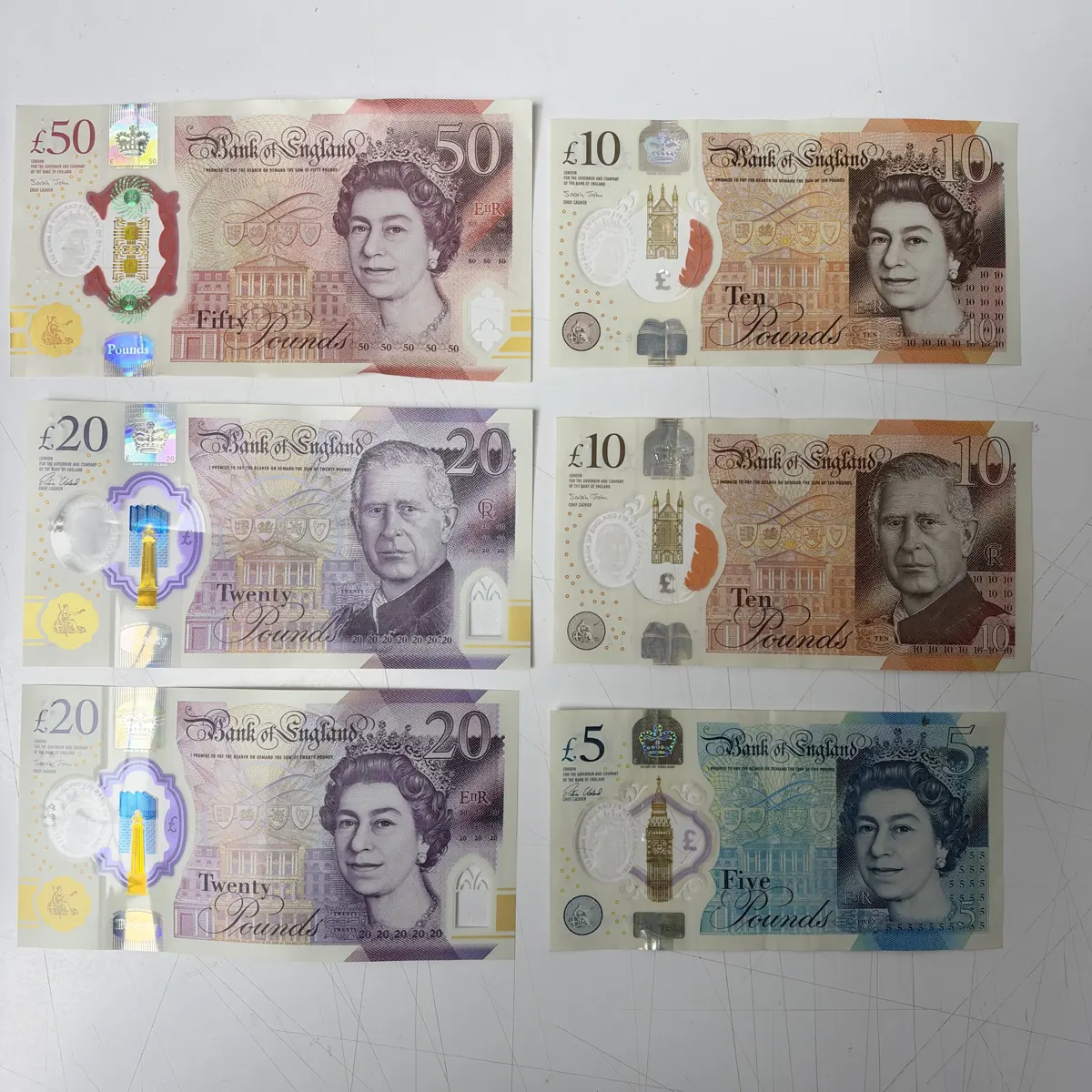
Bank of England polymer notes: these can be exchanged abroad.
The test takes two seconds. Look at the name across the top of the note.
| Printed on the note | Issued in | Exchanged abroad? |
|---|---|---|
| Bank of England | England and Wales, used across the UK | Yes |
| Bank of Scotland, Royal Bank of Scotland, Clydesdale Bank | Scotland | No |
| Bank of Ireland, Danske Bank, Ulster Bank | Northern Ireland | No |
| States of Jersey, States of Guernsey, Isle of Man Government | Crown Dependencies | No |
| Government of Gibraltar and other overseas territories | Overseas territories | No |
Current Bank of England notes are the polymer £5, £10, £20 and £50, with a portrait of either King Charles III or Queen Elizabeth II. Both portraits are valid.
Why Scottish and Northern Irish notes are different
In most countries only the central bank prints money. The United Kingdom has an older arrangement: three banks in Scotland and three in Northern Ireland are authorised to issue their own sterling banknotes. These notes are legitimate, and each one is backed pound for pound by assets held at the Bank of England.
They are, however, a local form of the currency. Even within the UK their acceptance depends on the willingness of the person taking them, which is why visitors from Scotland sometimes have trouble spending them in London shops. Abroad the limitation is much stronger.
Why an exchange office abroad cannot take them
An exchange office does not keep the foreign money it buys. The notes are sold on, to banks and to wholesale banknote dealers, who in turn ship them back to the country of origin. A note is worth buying only if that chain will accept it.
For sterling, the international chain handles Bank of England notes. Banks and wholesalers outside the UK do not buy notes issued by Scottish or Northern Irish banks, or by Jersey, Guernsey, the Isle of Man or Gibraltar. If we accepted one, we would have no one to sell it to. It would stay in a drawer indefinitely.
So the refusal is not a judgement about whether the note is real. It is real. It is simply a note that only circulates at home, in the same way a gift card is real value that only one shop will take.
What to do before you travel
The easiest fix is at home, and it costs nothing.
- Check your notes. Cash machines in Scotland and Northern Ireland usually dispense local notes, so if you withdrew cash for the trip, look at what you got.
- Swap them at a bank. Banks in the UK will exchange Scottish and Northern Irish notes for Bank of England ones, or you can pay them into your account and withdraw differently. Your own bank is the simplest place to ask.
- Or spend them. Use the local notes for your last purchases at home and travel with Bank of England notes.
- Or travel with less cash. Kraków is very card-friendly, and you can manage most of a trip without notes at all.
At UK airports, exchange desks will often convert local notes into foreign currency directly, but airport rates are rarely good. Swapping the notes at a bank and exchanging in Kraków usually works out better.
What to do if you are already in Kraków
If you have arrived with only Scottish or Northern Irish notes, your trip is not in trouble.
- Pay by card. Restaurants, shops, taxis, ticket machines and most attractions accept cards and phones. When the terminal asks which currency to charge, choose PLN.
- Withdraw złoty from an ATM. Use a machine at a bank branch and decline the conversion on screen. The reason is in our guide to paying in PLN and dynamic currency conversion.
- Ask a travelling companion. If someone in your group has Bank of England notes, euros or dollars, we can exchange those.
- Take the notes home. They do not lose their value. Use them or bank them when you are back.
How much cash you actually need for a short stay is covered in our guide to the cost of a weekend in Kraków. For most visitors it is less than expected.
Other pound notes that cause problems
- Old paper Bank of England notes. These are no longer legal tender; the paper £20 and £50 were withdrawn at the end of September 2022. We buy withdrawn notes after you contact us first, at a rate agreed individually. See our guide to damaged and withdrawn banknotes.
- Coins. Pound coins are not exchanged abroad. Bring notes.
- Damaged notes. Torn, taped or written-on notes should be checked with us before you come.
Everything else about bringing sterling to Poland, including how to read the GBP rate, is in our guide to exchanging pounds to złoty in Kraków.
A word about the counter
Our staff do not set this rule and cannot make an exception to it. Being told “no” after a flight is annoying, and we would much rather say “yes” and exchange your money. If the notes say Bank of England, we will, at the rate on the board and with 0% commission. If they do not, we will tell you straight away and point you to the nearest bank ATM, so that you lose two minutes and not an afternoon.
Our office is at Floriańska 37, under two minutes from the Main Square, open Monday to Friday 09:30–20:30 and Saturday 10:00–20:30. Current rates for the pound are on the home page.
Summary
- Only Bank of England notes can be exchanged abroad. Check the name across the top of the note.
- Scottish and Northern Irish notes are genuine, but they are not traded internationally, so exchange offices outside the UK cannot accept them.
- Swap them at a UK bank before you travel, or spend them at home.
- Already in Kraków? Pay by card in PLN or use a bank-branch ATM without conversion.
- Bank of England notes are exchanged at Floriańska 37 at the board rate, with 0% commission.
Frequently asked questions
Can I exchange Scottish banknotes in Kraków?
At Exchange Kantor Black Sheep, no. We exchange Bank of England notes only. Scottish and Northern Irish notes are not traded on the international banknote market, so exchange offices outside the UK generally cannot accept them.
Are Scottish banknotes real money?
Yes. They are genuine sterling, issued by authorised commercial banks and backed by assets held at the Bank of England. The problem abroad is not their value but the fact that foreign banks and wholesalers do not buy them.
How do I know which pound notes I have?
Read the name printed across the top of the note. If it says Bank of England, it can be exchanged abroad. If it names another bank, such as Bank of Scotland, Royal Bank of Scotland, Clydesdale Bank, Bank of Ireland, Danske Bank or Ulster Bank, it cannot.
What should I do with Scottish notes before travelling?
Swap them for Bank of England notes at a bank in the UK, pay them into your account, or simply spend them at home and travel with Bank of England notes or a card.
I am already in Kraków with only Scottish notes. What now?
Pay by card and choose PLN on the terminal, or withdraw złoty from an ATM at a bank branch and decline the conversion offered on screen. Take the notes home with you; they keep their value in the UK.
Written from the counter of a currency exchange office at Floriańska 37 in Kraków. General information, not financial advice. Rates in examples are illustrative; current rates are on our home page.